Young navigator turns Young Adventurer
*13 year old rally navigator turns climber as he scales highest mountain in Spain aged 19

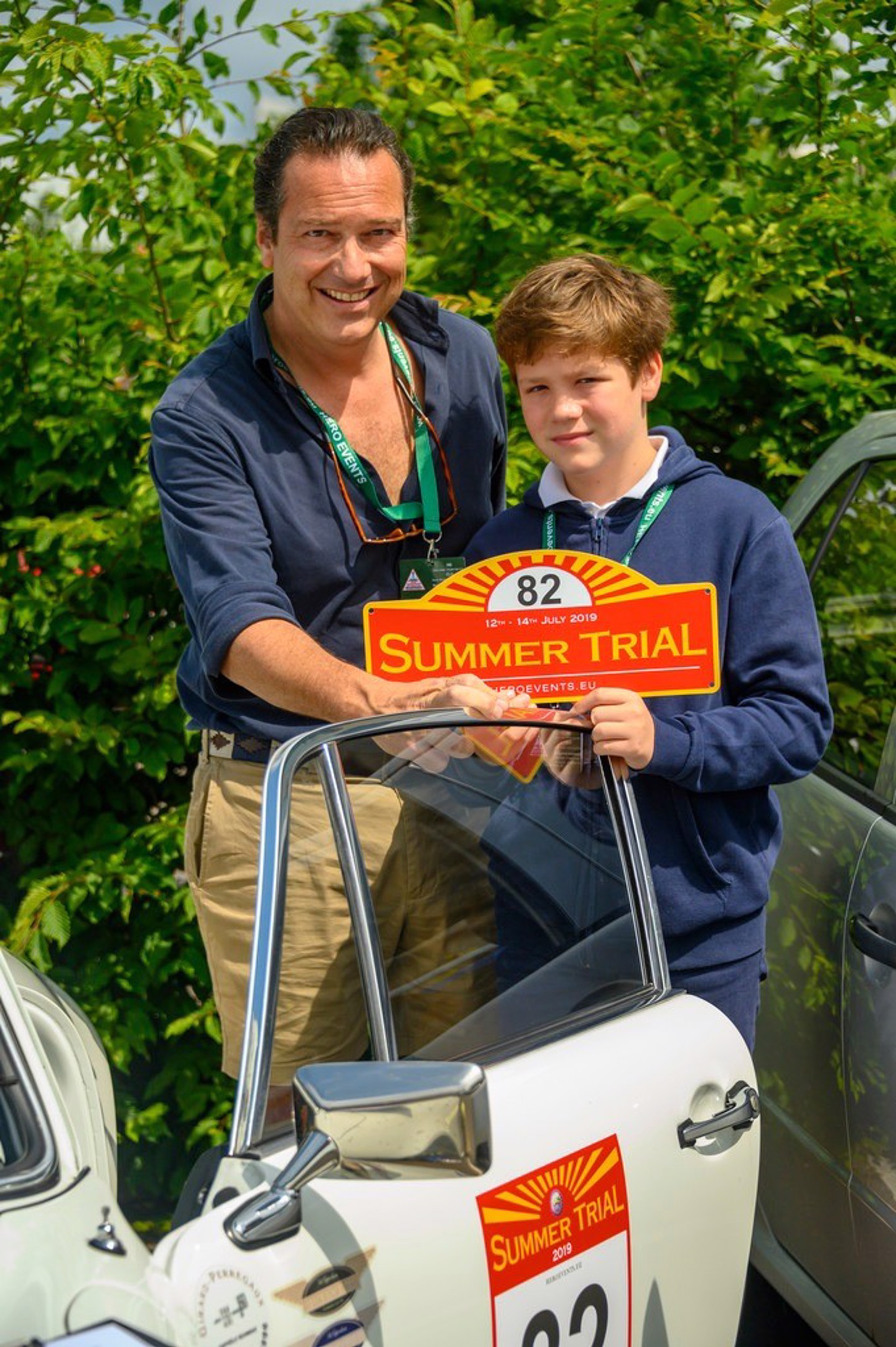
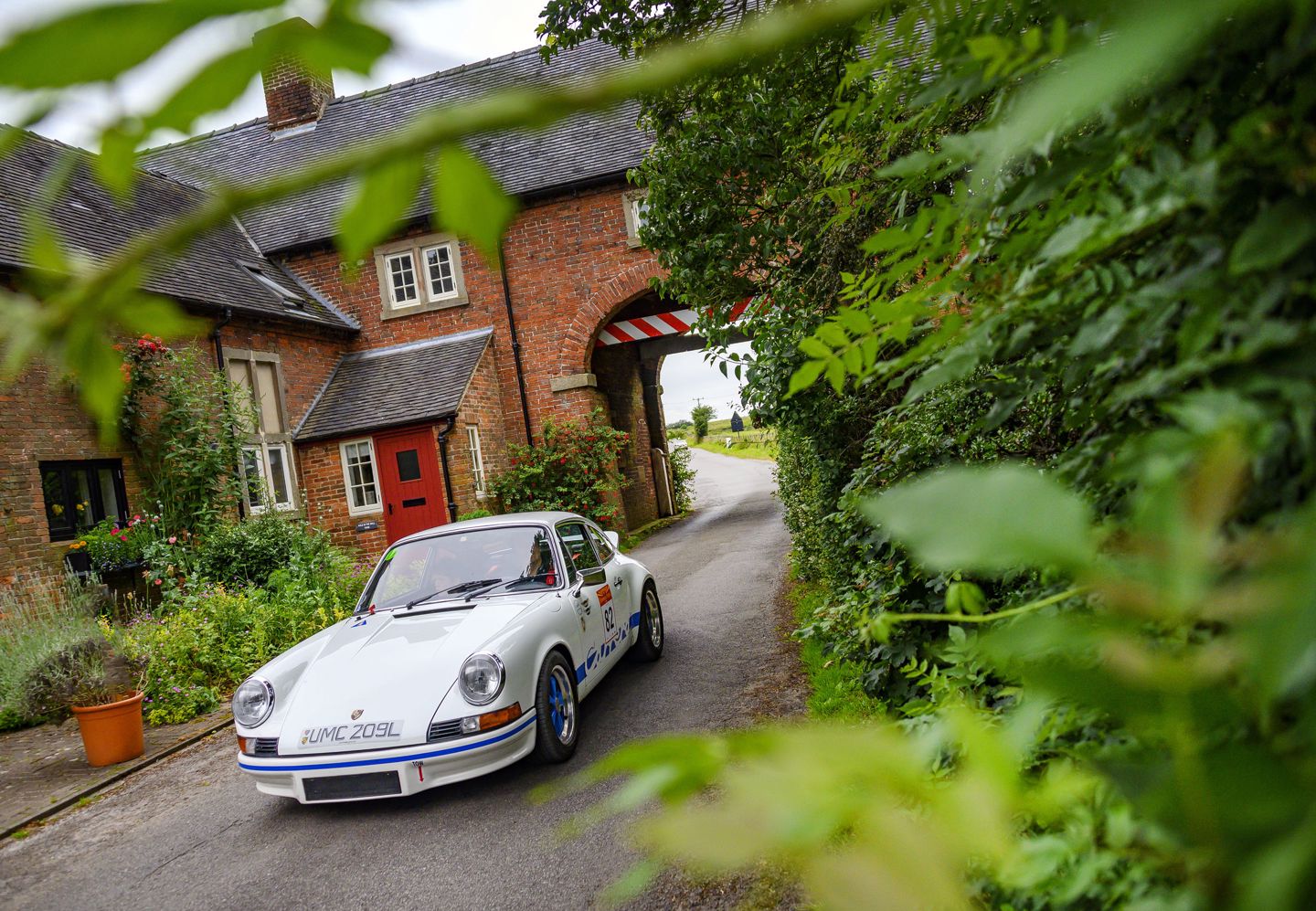
Having acquired a taste for classic cars and historic rallying sitting alongside his father Patrick Burke navigating in a Porsche 911 when he was just 13 years of age, Henry Burke has now turned adventurer as he scaled Spain’s highest mountain, Mulhacén, six years later.
In an adventure devised and organised by Henry and his University flat mate Byron Campos Bovée, the friends decided to tackle the tallest mountain in the Iberian Peninsula, Mulhacén, without any climbing experience, but with a desire to push themselves and reach the top in a difficult but adventurous climb, it was not without risk.
Both friends (aged 19) are studying at the IE University in Segovia, Spain, where Henry is in his second year of a Business Administration course. The adventure was not without its dangers which Henry’s parents Louisa and Patrick were all too aware of.
Patrick Burke; “Of course it was really worrying at times for both of us as they had no experience whatsoever. But they told us everything would be fine and thank goodness it turned out so well.
“I think they are true HEROs, and I hope they can inspire other young ‘born to dare’ HERO ERA community youngsters amongst our membership. Henry just passed his driving test, so I am sure we will be seeing him on some of our events back with me soon. His last event was the Summer Trial 2019, but with his newfound taste for adventure, maybe he will be aiming for the Peking to Paris Motor Challenge!”
Henry Burke described the hugely successful climb, despite the two friends inexperience, in his own words:
“Our trip began at 6am with a short walk to la Hoya de la Mora, a plateau home to a hotel, food kiosks and the highest point accessible by cars in the area. The plateau is situated next to Pico Veleta, a smaller (3400m) mountain that stood directly inbetween us and our goal Mulhacén. This meant that a large amount of the altitude we gained to summit Mulhacén was gained climbing Pico Veleta as we had to almost summit it, descend a few hundred metres and then begin the ascent of Mulhacén.
“The trip started on Sunday with us each carrying around 5 litres of water and plenty of high carbohydrate energy bars and snacks. The additional weight of this water for both days of hiking took its toll on us early on as the initial ascent of Pico Veleta was a steep piece of trail. We took breaks every 15 minutes and were not filled with hope for the rest of the journey considering it was 9 hours long and we had already started struggling in the first hour.
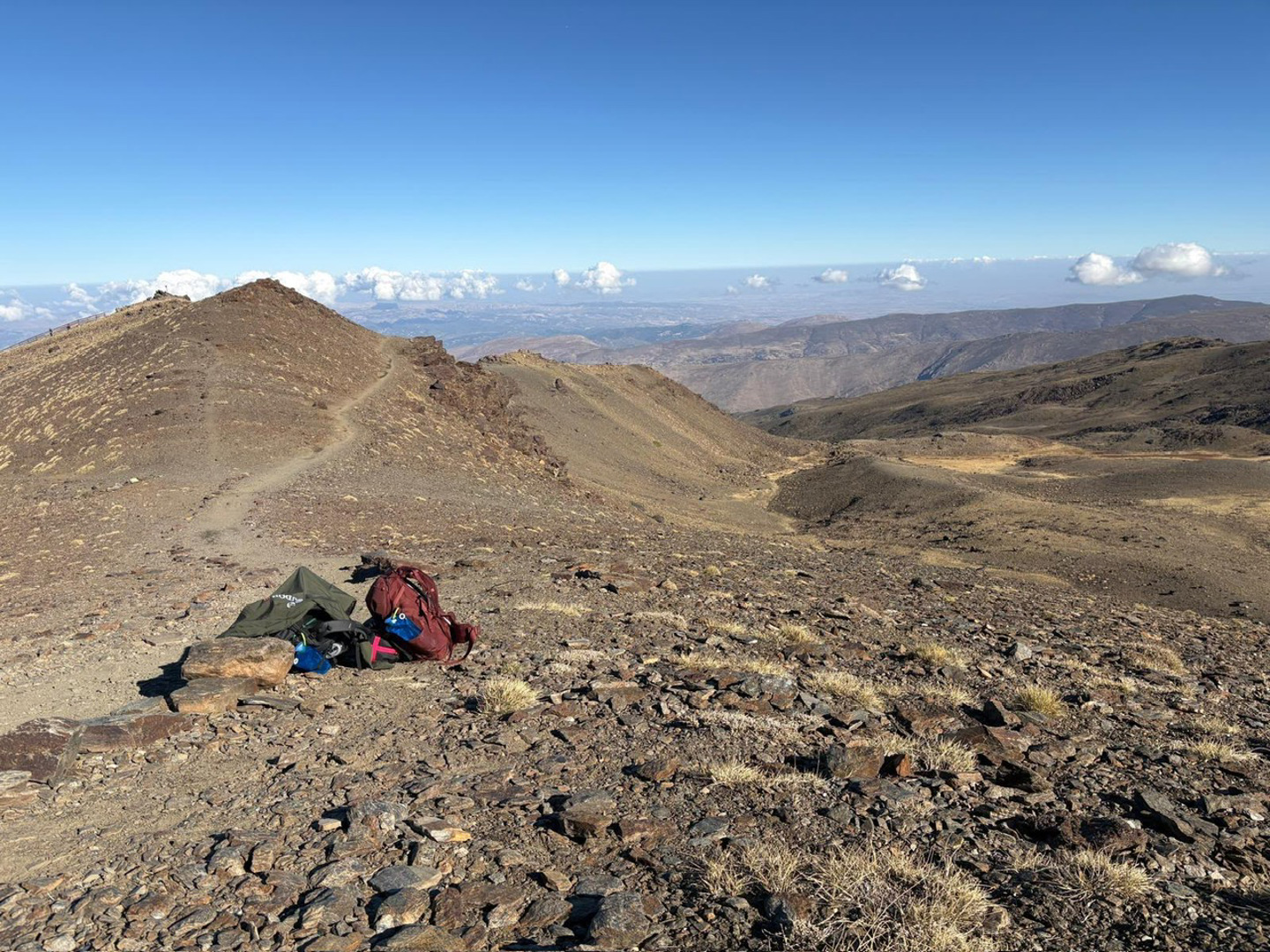
“However, as the day went on, we fell into a rhythm and the hours passed quickly. My favourite part of the journey was the stretch after Pico Veleta but before reaching Mulhacén; the trail was empty as most hikers returned home after reaching Pico Veleta and we hiked along ridges over massive valleys, which we thought looked almost otherworldly due to the absolute lack of vegetation at the altitude. Occasionally we encountered wild mountain goats and Ibex, these were the only signs of life we got for hours at a time on this portion of the trail.
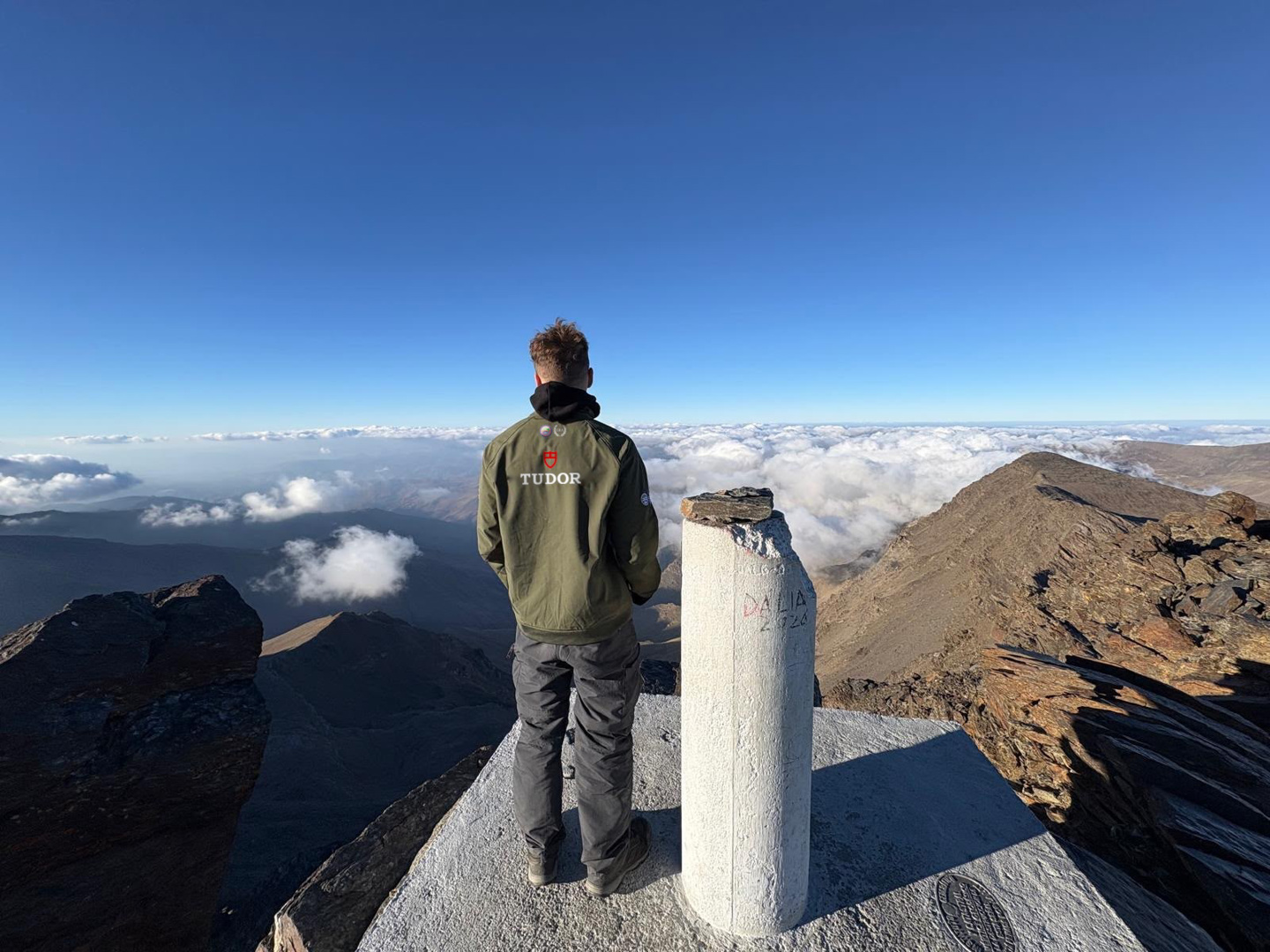
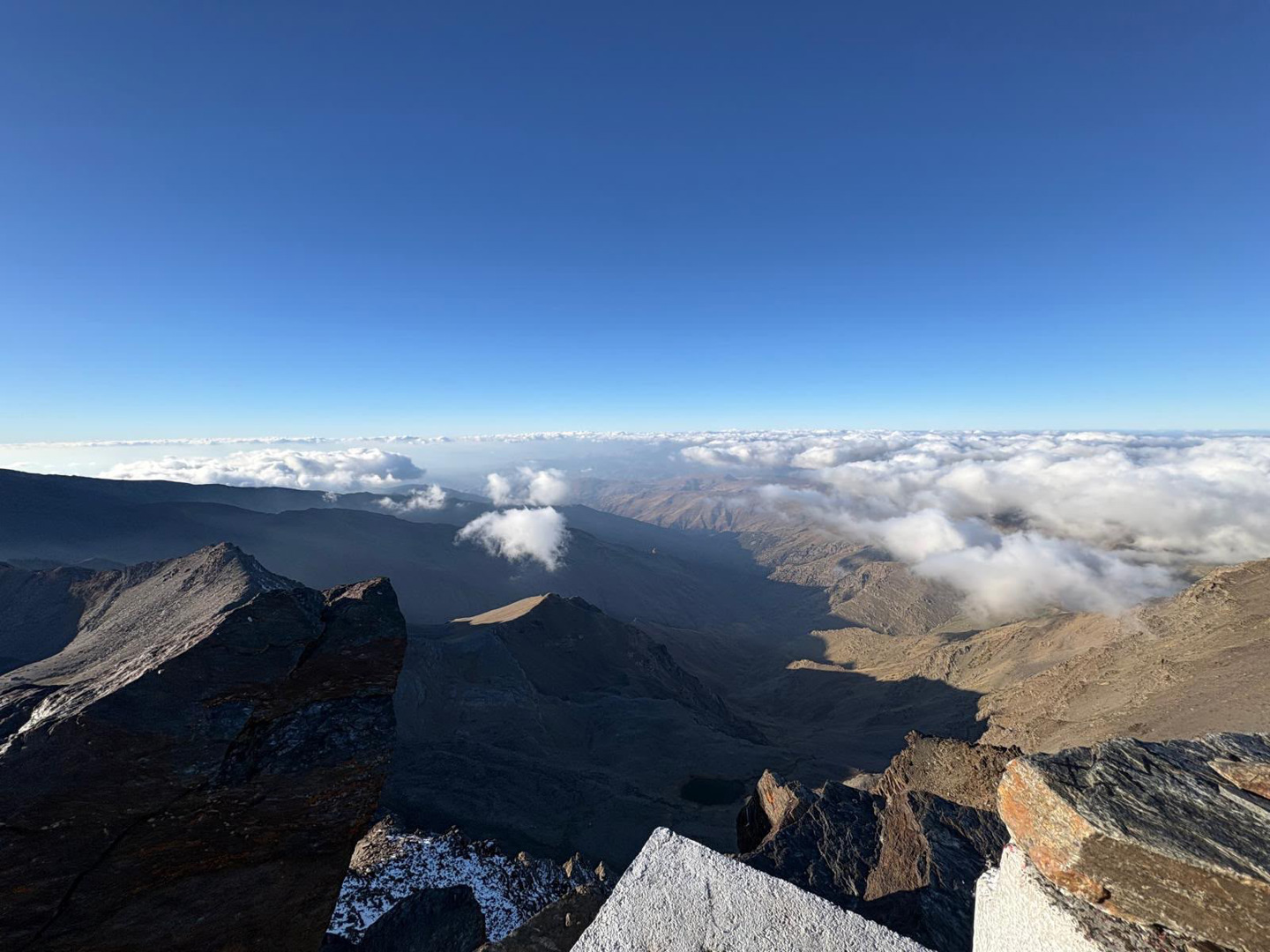
“The final 300 metres of elevation were by far the hardest. We dropped off our bags in a safe place before starting this final stretch and I am extremely glad we did. On starting this final ascent, we didn’t see the small inconspicuous path leading us up and so went off trail, scrambling over large rocks at a steep incline while staring down a deep sheer drop to our left! However, finally reaching the peak instantly made the whole journey worth it as we stood far above the clouds on the highest point on the Iberian Peninsula. A point where even Africa can be seen on a clear day.
“The plan originally was to leave in the early morning and aim for a 15-hour Sunday of hiking, going both up and down Mulhacén in one day. However, after discovering some mountain refuge cabins on our route, we decided to spend 9 hours summiting and exploring the mountain on Sunday, before sleeping in one of these cabins and leaving at 5am the next day for a 6-hour descent back to la Hoya de la Mora.
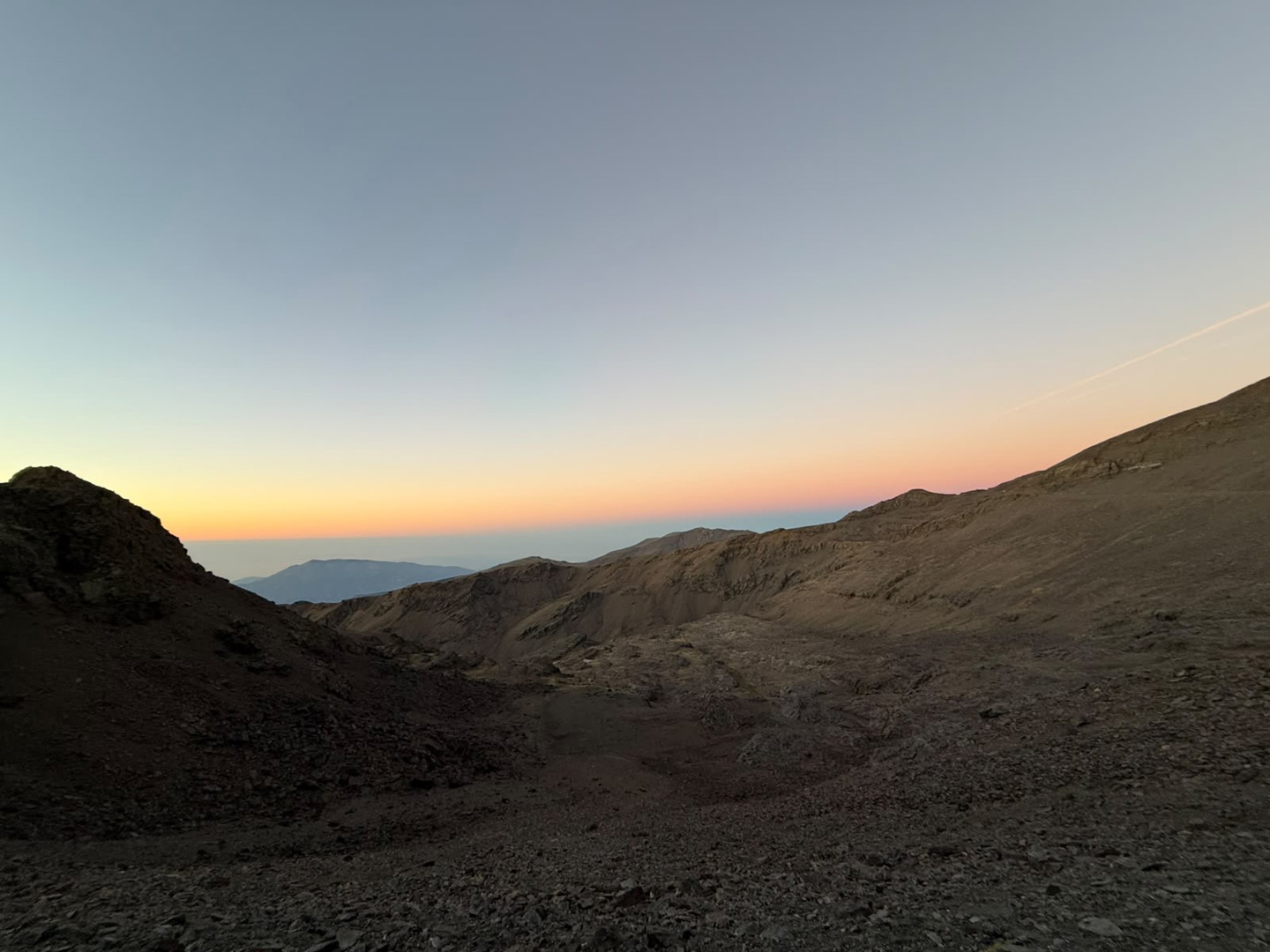
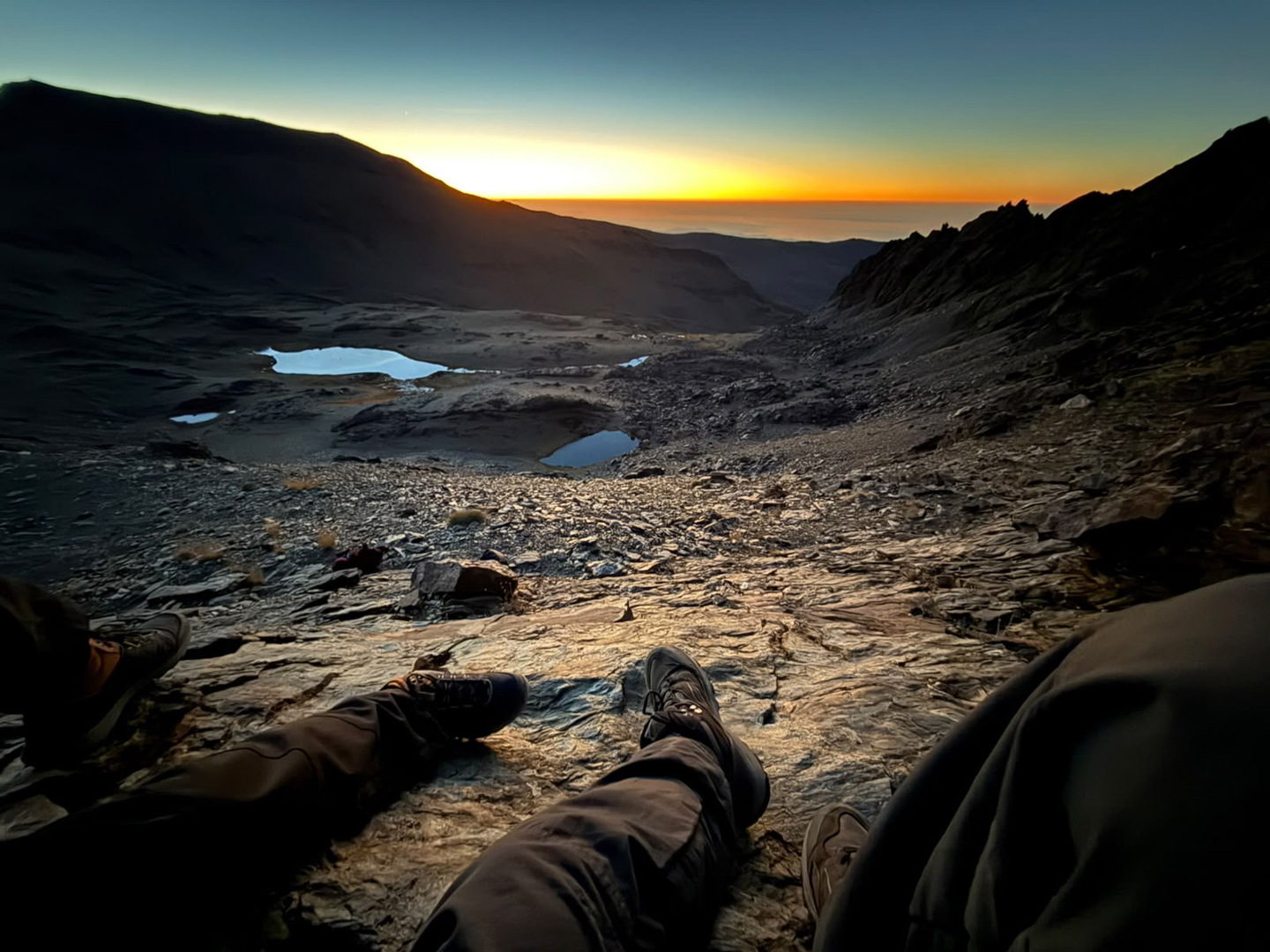
“Not only did this split the long trip in half, but it also allowed us to spend a morning hiking a gentle downhill while watching a beautiful sunrise over the mountains.
Unfortunately, in the interest of sticking to a budget and minimising the amount of stuff we were taking in our relatively small bags, neither of us took sleeping mats, only sleeping bags, thinking that we could lay down clothes and jackets to make a DIY mat. These cabins have very few elements of comfort, having no electricity and only hard, cold wooden shelves to sleep on. Additionally, the small cabin that we came to was already full of another group of 5 hikers, meaning we had little room to sleep and ended up having a terrible sleep with nothing but a thin sleeping bag between us and the hard wood shelf. from 9pm to 5am where we both only slept around 3 hours each.
Thankfully, due to us carrying much less water and food on our backs and having some caffeine in the morning, we were able to have a relatively stress free and easy 6-hour journey back to la Hoya de la Mora, where on taking a seat at the hotel cafe, we both immediately fell into much needed sleep.”
Ends